Tuesday, August 08, 2006

WorkSpace: Innovative indy legroom in Vancity!


I just recently checked out my good friend, Bill's recent website entry on his adventure with business in Vancouver called WorkSpace. From my understanding, it's this fabulous location overlooking Vancouver harbour where an independent business goer (webspace designers, consultants, etc) can set up their laptop (seem to be a theme with apples) and work in an environment set up for networking with others and getting out of that makeshift office in the closet. Brilliant idea and look forward to see its success in coffee-licking Vancity. Most importantly, he's got some memberships to giveaway in a contest for the best ackward work area photo or something to that effect. Enter and win! Cheers, Bill, wish I was there for the party.

Monday, August 07, 2006

Salima's Visit to Durban


Here's a photo when Salima came visited me last month. She just came back from completing a project with CARE International in Zambia.

Friday, August 04, 2006

Kruger Baboon's sombre pose


Kruger Baboon's sombre pose
Originally uploaded by make_change.
Did I tell you I have a Zulu name? Nqobile. Apparently it means “the conquered”.

I never understood why I was given a Zulu name; it’s not like when I meet a person who speaks a language other than English, I would immediately associate them with the name, “Bob” or “Sally”.

But as I read on for my research paper on the concept of ‘ubuntu’, a theory for the Zulu name is to make sure I feel included within the culture and be part of the community. 'Ubuntu' is about the characteristics that make us human like kindness, compassion, respect and charity and the idea that we exist because of our contributions back to the community. The best definition is through isiXhosa proverb, “umuntu ngummuntu ngabantu” or, “I am because we are” (Marx, 2002: 52; Venter, 2004: 152; Mbigi, 1995: 15). Under traditional context, such a proverb would deliver the importance of performing one’s duties for the good of the community especially when those duties are carried out for his or her small traditional villages where one lives for survival.

Kruger Leopard stares back at tourist prey

Ever since I came back to southern Africa, I promised myself to visit the ever-famous Kruger National Park in Mpumalanga province, South Africa. I think the guilt set in when I came home to Vancouver realizing that I had lived an hour away from one of the best place to see the Big 5 in the world. So last week, I flew in to Nelspruit and arrived at the Paul Kruger entrance of the park. Sean’s brother worked at the park as a manager so we were warmly invited to stay at his pad where he shared with two other staff members. It is fantastic knowing people working within the park because you get to do things that the ordinary visitor would not get the chance to experience. The night that we arrived, we went on a game drive. Usually cars are not allowed on the road past 5:30pm unless you had a permit or were on a night-drive tour. Of course, staff have their privileges as well and we drove around for an hour before we spotted three lions on a side road. One of them came right up to the car, gave a sniff near my passenger door and then gave a small little growl. Small growl sounds like a terrifying rip-your-head-apart message when the lion is centimeters from your head and the only divide is the steel of the car side door. Then followed the spotting of a leopard! Absolutely ridiculous to see this cat walk past the car, large furry paws and all. Never got as close to the cats as that evening during the rest of the trip, amazing. We were able to spot all 5: buffalo, lion, leopard, elephant and rhino. One crazy part of our trip was the rhino capture where we jumped into an open high-seated 4X4 and we followed a helicopter to where rhinos were spotted. The first rhino was shot by a tranquilizer dart from the air and then whobbled its way towards the dirt track. He was then maneuvered into the truck to be transported to a local game farm who had purchased him by tender. Apparently it is possible to buy a rhino for the going rate of around R120,000. Of course the conservation officers would have to ensure that you have all the proper facilities to hold such an animal. Another fact that I learned is that the park has an abundance of elephants and the packs are growing quite large. In terms of selling such an elephant, it is very difficult because elephants tend to follow the same routine for the rest of their life and adaptation to new places is hard for the animal. It could possibly lead to much damaged fence and all. The best part of the rhino capture was a ride on the helicopter and follow the animals by air! So stoked because I have not been on a helicopter before! Another great thing of knowing people within the park is that we get to stay at the ranger’s guest house and hear about the ups and downs of living in the park from their perspective. The ranger has to consider the perception of not only the animals but the public and how to get visitors to understand the environment of this ecosystem that they see. Seemingly small problems like one animal having TB could have devastating effects on the somewhat balanced equilibrium of the animal life and park life. Lastly, our final night consisted of a farewell party for Sean’s brother and a feast of delicious venison and meats from the main chef of the camps topped off with a sweet peppermint dessert. Unbelievable treatment at the park and can’t wait to visit again.

Friday, July 21, 2006

Resistance to Privatization in South Africa

I just came back from a packed house of activists from around the world and a presentation by three master's students on their continuous work in Soweto and Jo-berg on the struggles against privatization of water and electricity (Anti-Privatization Forum) for the poor communities of the area. Interesting work by Prishani Naidoo, Trevor Ngwane and Ahmed Veriava on the idea of prepaid water and electricity meters in communities and the impact on behaviour, resistance, rights, and acceptance. Should there be a limit to the consumption of water or should it be a human right for all people? The assumption is that the poor will pay and 'learn' to not waste water and be good citizens by paying. Prepaid became a way to get people to pay when the parastatals could not stop the people who were not paying their bills. However, when does reducing the consumption of water start to affect how people behave in fighting over the use of water and finding ways to steal water because they simply cannot afford to pay the rates set. It is a never ending struggle to connect the working class together and organize to resist and fight for their constitutional right to water. We have not even covered how wastage is not 'learned' by the ruling class who fill their swimming pools, wash their driveways and cars. So 'who is the real thief' was the question arised by Trevor and where is the justice when the resources are controlled by the elite few? Trevor also eloquently puts an image of government by applying apartheid in an example of an individual on life support removed from the machines. However, now apartheid re-appears as commodification of resources like water and electricity as to how the body parts can be used for other purposes. Morbid example, but well put.

Thursday, July 20, 2006

World Cup 2010 in South Africa!


Well, now that Germany is over and the Italians have finished celebrating around their country with pride, South Africa gets their chance to shine by hosting the 2010 World Cup. All I hear about in the news is about the preparations for the World Cup and whether South Africa will be able to compare in standards to the well-organized event that took place in Germany. Well, yesterday, there was the city of Cape Town stating the price of their 2 billion rand new stadium and negotiating on who will be responsible for the hefty sum, FIFA, national government or the city? In my class there will be one guy doing his research on the socio-economic effects of the World Cup which could be interesting.

South African Fact: 11 official languages: Afrikaans, English, Zulu, Xhosa, Swazi, Ndebele, Southern Sotho, Northern Sotho, Tsonga, Tswana and Venda

This will probably be my last blog for this month as I head up to Kruger National Park next week to see the Big 5 in the game reserve. All I want to see is a lion.

World Social Forum (Nairobi 2007) Preparations here in South Africa!


UKZN Centre for Civil Society is preparing for the World Social Forum in Narobi, Kenya January 20-25th 2007. The World Social Forum is an opportunity for activists around the world to collaborate on social and economic justice, and environmental sustainability. Starting today there will be seminars on social movements taking place across Africa particularly here in Soweto and Johannesburg. On Saturday, the day is called "African and International Critical Perspectives" and will see the likes of some prolific people who have fought the struggles of apartheid South Africa as well as the fight for rights to water, housing and life. Other exciting CCS events will be happening next week.

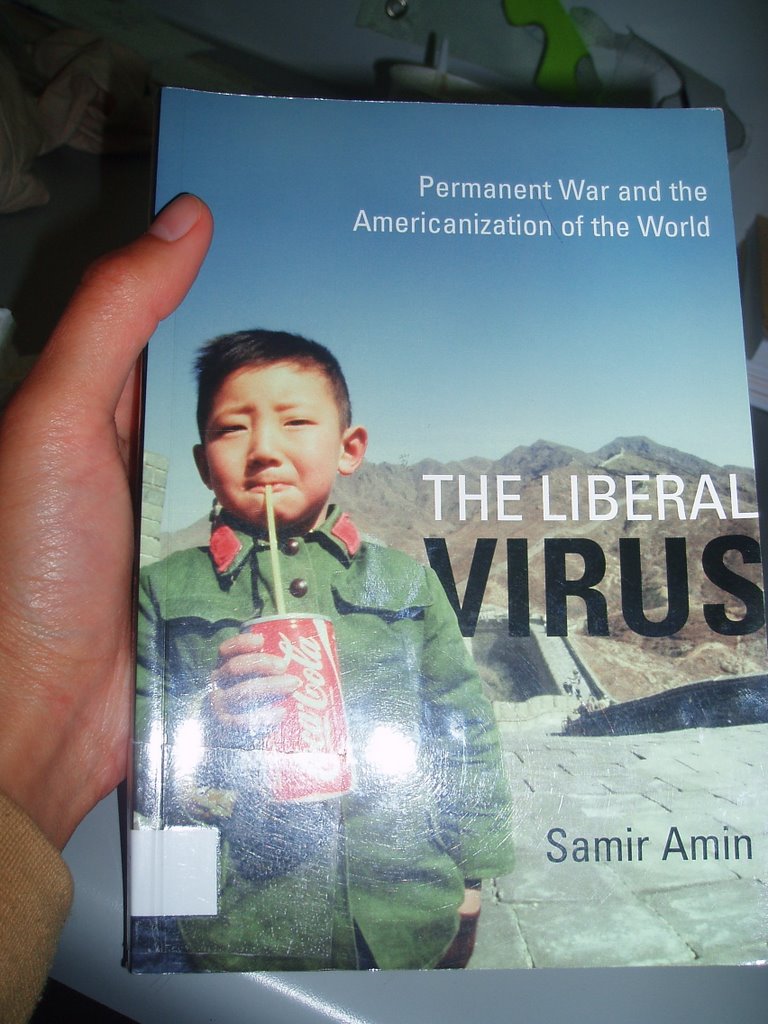
The photo is a book I am currently reading called the Liberal Virus by Samir Amin. I just started it but it looks like it is comparing Europe and The United States in their ideologies about capital accumulation and how the US model is much more dangerous in exploitation and increases of poverty around the world.

Wednesday, July 19, 2006

Why our lives veer as they do.

Meth also makes us look back into our lives and try to see what different events and ideas led us down this certain path in life. We are somewhat directed on our own and somewhat veered by the constraints of policy in our daily lives. If Canada didn’t have universal education or health care, how would citizens develop as a nation? If they didn’t attempt to provide loans and scholarships, could I (or you) be where you are today? Why does Canada have strong campaigns of multiculturalism? Is our government leading us down a path promoting individual freedom through markets which are benefiting a more elite group, increasing the rich-poor gap and slowing diminishing the size of the middle class as seen in some parts of the United States? Canada is no different in its issues and politics as it is here in South Africa. The government that they choose must make important decisions such as whether education should be a universal right even though resources allocation is inadequate and unequal and teaching can be so poor in some parts of the country. Can some young people actually be worst off going to school?

South African National Anthem

Nkosi sikelel’ iAfrika
Maluphakanyisw’ uphondo Iwayo
Yizwa imithandazo yethu
Nkosi sikelela, thina lusapho lwayo.

Morena boloka setjhaba sa heso,
O fedise dintwa la matshwenyeho,
O se boloke, O se boloke setjhaba sa heso,
Setjhaba sa South Afrika – South Afrika.

Uit die blou van onse hemel,
Uit die diepte van ons see,
Oor ons ewige gebergtes,
Waar die kranse antwoord gee.

Sounds the call to come together,
And unite we shall stand,
Let us live and strive for freedom,
In South Africa our land.

Monday, July 17, 2006

Durban Bus Rant: One Wrong Turn

Today’s reflection on the bus: Well, it is not odd that once again Durban Transport had a few buses not show up on their regular route so the 4:40pm 318 Fynnland bus saw it packed with people standing (first time I’ve seen this) of Bluff folks just trying to head home to their families. When you think it can’t get worst, the bus, trying to follow its regular route, has been detoured by road work and we are now cruising through the side streets of this quiet neighborhood with the working women on the bus screeching in horror (maybe delight?) due to the detour then yelling “right!” or “straight!” “ NO, left!” while kids and homeowners smirk at the bus manovering through the back lanes. We made it through and I don’t think I have ever heard so many relieved thank-yous from both the passengers and driver.

Why Small Things Count in our Lives

Everyday I have been taking this Political Economy class I'm put into great headspins and critically trying to make out where I stand in terms of ideologies to political and social development. It almost comes to a point of depression because of the seriousness of some of these issues and how as I become more knowledgeable in this field of development economics, I may need to make these crucial statements of what I strongly believe and the implications that fall behind those statements that I make. I guess that is a reflection back to why I set up this website and understand how the small decisions and statements that we make can really affect, both good ways and bad, the way in which the world works. It happens to everyone, everyday as we make decisions which can make us happier at the expense of others or try best to seek ways to be happier without making others worst off. So expert or not, I suppose it's important to consider our responsibilities to our communities both local and global and how are interactions, shopping, demands and needs can dictate the lives of others on the other side of the globe.

Billabong Pro Surfing Competition


South African Surf News: Billabong Pro: Looks like yesterday, 2nd Round at Jeffrey’s Bay’s competition saw dolphins and head high surf for this competition. Apparently, the Iron brothers have been eliminated but Slater is still in (wearing the signature white wetsuit). These waves had no comparison to the barreling waves caught by Andy Irons from first round last Friday; he pulled in like nobody's business, disappeared for a lifetime in the barrel and popped out like he's been doing this since kindergarden. Hot stuff equal a score of 10!

This morning will have the call at 8am (I'm watching the sunrise live online right now; beauty). I wish I wasn't living 10 hours drive away from the action...

the oneredpaperclip.com fad... straight outta Totem.


I thought it was a fad when I first heard from Esler on Kyle’s whole oneredpaperclip website scheme. It must have been major slow business news in South Africa on the weekend's Sunday Independent if he’s caught first page in the Business Report for the trade for a house in Kipling, Saskatchewan. Seriously, those from the UBC Totem legacy years know what were talking about. Word kyle.

Nelson Mandela's Birthday


South African News: Madiba’s birthday. Today, on television had Nelson Mandela and wife, Graca Michel celebrating his 88 Birthday. Niceties like pleading to business people to provide funds for education and then threw in the presents from Fidel Castro (rum and cigars). Nice SABC news.

Sunday, July 16, 2006

Six in the Morning Roll-Call.

Canadian Asian Student: check.

For the first time, I caught the 6:05am bus to school so that I can start to prepare for my exam on the comparing and contrasting the ideologies of Barr (liberal), Lal (libertarian), and Mkandawire (democratic socialist) to economic and social policies... and there I was part of the "working man's" bus. I'm one of the first one the bus so trickle in the city workers one by one with their own agendas and characteristics. The sun hasn't even risen, yet the day has started for many on the bus. While I pretended to snooze off, I watch the two in front of me speaking through sign language rapidly moving their hands in conversation. crazy.

Most of the weekend I spent catching up on readings and notes that I have neglected from the week. This class has really tried to closely ask what you really believe in and what is right for a country in terms of social and economic policy. For example libertarians like Hayek, Lal, the World Bank and Friedman would say that the market is the most efficient method to growth and social safety nets are residual and left only for those who are unable to fend for themselves (those in absolute poverty). Liberals such as Barr would see social policy as an efficiency because it attempts to correct those market failures that exist. For example, he states that people are poor because the market does not provide full information, it is in imperfect competition and the government is necessary to provide the fair environment (through regulation and distribution) equality and social justice. And there is Mkandawire who I have decided is a democratic socialist who believes social policy is embedded in economic policy and you cannot leave one without the other. Social policy must be included in macro decisions as it sees the bias in economic policy: deflationary (aims for stability but not necessarily high growth or investment), and the "male breadwinner" mentality (that one household member will be able to fund and provide all needs in the family, while other member, unpaid, cares for the home). Social policy is necessary to create a community of citizens who are productive, cohesive health members of society. Is this enough information for a two hour essay?

Thursday, July 13, 2006

UNDP Working Paper on Privatization and Public Services Sector

"Can Privatisation and Commercialisation of Public Services Help Achieve the MDGs? An Assessment*", by Kate Bayliss and Tim Kessler.

I just found this article (haven't read it yet) on how the the authors argue that public services should not be privatized as it will go against the Millennium Development Goals and will not provide affordable services to the poor. Let me know if anyone has read it and what they think.

Wednesday, July 12, 2006

South Africa and fighting poverty

Our Political Economy class is currently reading a journal article, "Neoclassical and structural analysis of poverty: winning the 'economic kingdom' for the poor in southern Africa." by Sarah Bracking at the University of Manchester. She combines many references which I was reading the last quarter, Ravillion, Dollar & Kraay, and Rodrik on trying to understand whether inequality have effects on growth. She also brings up the points on how econometrics have weakly proven its case in connecting openness in trade and strict macroeconomic policies with efficiency and growth in developing countries.

"To my mind, capitalism went wrong when it divorced wealth from its true purpose. The true purpose of wealth is to satisfy very simple needs: the need for food, the need for shelter, the need for education, and so on. In other words, the end of wealth is the banishment of poverty - and wealth is to poverty what light is to darkness." (Julius Nyerere in 1965, cited in Charlick, 2003)

Tuesday, July 11, 2006

Nice sunny winter in Durban


This has been the longest, sunniest winter I have ever experienced in my life and I have nothing to complain about that. It makes for good times watching World Cup soccer (gotta love the italians) and running on the beach in the mornings. So as of August, I will cruising around in a shiny red (Leanne calls her "ruby"), 1991 Mazda 323 (damn, another standard). purchased at only 18,000 rands ($3000 USD) and only at 82,000 kms (formerly owned by a granny)... well, she'll be taking us to the university and back and saying goodbye to the aqua blue Durban transport bus as of July 31, 2006.

What else? Political Economy course has us reading inserts by Nicholas Barr's book on Economic Theory and the Welfare State, mainly comparing libertarian, liberal and socialist views on the economy. Interesting stuff.

Also reading stuff from the United Nations publication by Thandika Mkandawire basically summarizing that social policy is embedded in economic growth.

Friday, July 07, 2006

IDRC Internship Awards 2006: Due Sept 2006.

For those Canadians interested in conducting research in International Development, here is an opportunity to do so through the IDRC.

Adbusters Ed#65: Why are Students Leaving Politics Out of Economics?


Interesting quotes from economists and students on the current study of economics! it's why I'm in South Africa not Canada studying this concept: Adbusters.

Adherence to Antiretrovirals (ARVs)

Yesterday was an article, "New AIDS Pill to Treat People in Poor Countries" in the New York Times which refers to the FDA approval for a new 3-in-1 antiretroviral (ARV) pill which can be taken by HIV/AIDS patients. It is produced by an Indian generic drug company and this approval means that the US, the largest distributor of ARVs can start releasing this drug to the rest of the world in their USAID programmes. Currently the WHO has approved another 3-in-1 ARV pill and it is being used by around 400,000 patients. Why is this important for the patient? After completing this course on HIV/AIDs in Southern Africa, I learned that a major barrier for the success of ARV treatment is whether patients are willing to adhere to the requirements necessary. In countries where HIV+ are discriminated by major stigma is placed on families and friends, and poverty is prevalent, adherence can be hindered. Even simple this like finding transportation to your medical appointment, taking time off work, hiding one's status and the drugs from the family, etc. can be major dilemna. Having the chance to take only one pill twice a day can alleviate a few of the difficulties in adherence. It seems that adherence becomes a collaborated effort by medical staff, the individual, family and community to support the patient. These social actors can truly assist in successful treatment and healthy lives.

Wednesday, July 05, 2006

back in class. Political Economy

Def: "social laws of protection and distribution". It's great yet tiring to be back in class. I'm in this intensive 3 days a week, 3 week course called Political Economy in the Welfare State taught by Charles Meth. Today, we are reviewing theoretical aspects of the welfare state: objectives such as efficiency, reducing inequality, social integration and administrative feasibility (book by Nicholas Barr). Also reviewing ideologies of libertarian, liberal and socialist theories. Interesting quote from the instructor of capitalism - "goals of creative destruction". thought to ponder. Socialism looks at trying to ameliorate the worst effects of capitalism. According to socialism, capitalism is this inevitable place that causes inequality as it exploits modes of production for goods to sell. Someone will get the short end of the stick unfortunately, but how can one make this as least inequal as possible.

I've got two papers to write: first is on the "spirit of ubuntu" or the South African ideal of solidarity and the second paper on evidence-based policy formation... apparently there is little information on either topics so YEA! I guess I should probably start researching now. Let me know if you have any leads.

Tuesday, July 04, 2006

Mr. Price Pro


So I found out that this week, Durban hosts the 6 star WQS surfing competition called Mr. Price Pro. Big names like Occy, Sunny Garcia, Andy Irons and my fav, Kalani Robb are strolling the beachfront of North Beach... crazy. I'll be sure to head down and see what kind of festival this is really all about. In the meanwhile, here is a shot of yesterday's offshore from Garvies... crowded lineup by 10:30am.

Cathedral Rock at Waterfall Bluff

I'm back within distance of communication via cell phone and internet after being in the Transkei for one week. I have been helping out with my friend's PhD project monitoring predator marine activity during the annual South African coast sardine run. This sardine run is quite famous as filmmakers from National Geographic and BBC come down to try to capture this phenomenon of bait balls (sardines circling in a tight ball formation) and the sharks, whales, dolphins, gannets and other predatory fish follow them along the coast. Apparently this year's sardine run was a flop because of the consecutive fronts that hit the coast the last two weeks of the run. Unfortunate times for filmers but could be useful information for researchers like Sean. Basically I was hiking 1 1/2 hours through high grass (tick-infested), prickly bush, boggy patches of mud, cow patches all over the place and crossing river streams to the research site. The view was spectacular and you can see the other photos by clicking on the Catherdral Rock photo. Great times near the campfire with Nowelee's delicious stews, a porter house steak with bbq'ed gem squash and potatoes... besides the polony sandwiches, the appetite was satisfied. The weekend before coming back to Durban, we stopped off at the hippy town called Port St. John's. Apparently, this was an area that people who were trying to avoid the whole apartheid era escaped to this coastal town and hide from the policy in the high cliffs and bush. Being there now, I can see all those possibilities. Enjoy the photos and on we go with the last of my Master's courses....

Sunday, June 25, 2006

Port St. Johns

Im currently heading up the South Coast to an area called Port St. Johns through the Baz Bus company. Its this transport company that takes you from one backpackers to another, super convenient. So they are dropping me off at Jungle Monkey backpackers and well see from there how my one week study break is end up. Update when I get to the other side!

Sunday, June 18, 2006

Beadwork by Kwandengezi Community

This weekend, I travelled over to the Kwandengezi community (just outside of Durban) for a traditional Zulu lunch and "unique township experience". One of the girls in my course, Erin, has been volunteering for the Ethembeni Crisis Centre and hosted this fundraiser with the Rotary Club of Pinetown. We got in around 11am and checked out some of the beadwork by the women, enjoyed a local soccer match (the stands were filled with local kids), a huge lunch (curried chicken dish, tripe dish, homemade bread, desserts, etc) and watched some of the singers at the local hall. Good little study break.

Saturday, June 17, 2006

Finish (almost) Second Quarter!

I finally finished my second quarter classes! It has been close burnout term with lots of assignments and essays some of which I am still working on! Overall, I have learned alot from the three courses and I look forward to a much calmer course workload coming up (one course, 'Political Economy' in July and 'Social Policy' in October). The rest of the time will be spent on prepping for my dissertation and trying to pass through the Higher Degrees committee and finish research and get on with the dissertation.

Right now, I'm writing my final essay in HIV/AIDS in Southern Africa about witchcraft and its implication in HIV/AIDS. There have been some amazing Anthropology writers like Renyolds Whyte and Wright and Henderson who are investigating the ideas of social networks, traditional healers and how they can help in stopping the spread of HIV/AIDS. When you mention witchcraft, it's a sensitive subject that people would not discuss with others outside of their family or community. Statements like "AIDS is witchcraft" come out from outsiders and people within the community. People know how HIV/AIDS is biologically spread but, for a disease that holds little cure in the communities (especially where antiretrovirals treatment (ARVs) are hard to get, nutrition is poor, transport is scarce), it is more psychologically acceptable to think it is a spirit that keeps a person sick and that there could be possible ways to try to banish this spirit. In tight communities like in Uganda where kinship is strong due to ancestoral land ownership, families are collective and attempt to assist the sick according to directions of the traditional healers. They also find it psychologically healing to spend their time raising money to buy a sacrificial animal than sitting around and mourning the soon-to-be dead. As for other African communities where kinship is weak and the population are made historically of migration (South Africa), witchcraft is used more to blame for this loose knit network. Women are usually to blame for using spirits to take their community sons away and in the city, succombing to disease. This comes from a strongly patriarchal history, where men held most power within households and today this system is weakening with women working and outside forces changing the culture of rural communities in South Africa. Unfortunately, with such weak family networks and high migration for work, the spread of HIV/AIDS are less influenced by social family pressure compared to those in Uganda where families are tight knit and depend on the social network greatly. Tight social networks make messages of HIV/AIDs and prevention more believable and strong. The answer for South Africa? It will have to be creative and powerful and seek social behavioural change if they hope to see 26% HIV prevalence rate go down.

Monday, June 05, 2006

Monica, Lupatana baby


Monica, Lupatana baby
Originally uploaded by make_change.
This weekend, I spent mainly working on an assignment about labour, globalization and development. Most of the conversation revolved around the exploitative labour by multinational companies in manufacturing, women and child labour. After reviewing some of our academic journals, it came to me that there is little empirical evidence or work done on labour with the actual people at work. Most legislation or protests have come from naturally NGOs that have not investigated the actual effects for those working at the factories. I learned that actually women are actually receiving generally better pay and flexibility than before when they worked either in the informal market (selling vegetables or goods in a small stand) or unpaid domestic work. Some women have stated that they have gained confidence from being able to bring home some of the household income and they are now able to hold negotiating power in the relationship. In terms of the child labour issue, it is a rare case to find children under the age of 14 working in factories. Most children are actually working in agriculture (herding cattle, feeding animals) or doing domestic work at home. Around 74% of children who do work also attend school. Children are usually put in the situation of labour because parents have become desperate in poverty or low incomes that they must resort to having their children to help. Recommendations of raising household income for families is the best solutions. Education initiatives (education subsidies, food for school programmes) can also motivate parents to send children to school. It is a difficult issue to face and I see now that there is really no easy answers.

Donkey on road to Lupatana


Donkey on our way to Lupatana
Originally uploaded by make_change.
Sorry for the very tardy entry for the last 2 weeks. I have been trying to adjust to my new mode of frequent transport, the Durban Transport public bus system. So far so good, but I'm needing to leave campus basically right after class so that I can catch the last bus home and before it gets dark. Needless to say, it really is no excuse since I could type my information at home before coming to school... I won't go there.

Going back two weeks ago, I made a trek to a place called Lupatana, an estuary around 15-20km from Lusikisiki, Transkei, South Africa. It is another one of those treks through muddy, unpave terrain that make you bounce up and down in the car with the rest of your provisions. Once we arrived along the coast, the Jeep crossed the estuary to a hiker's hut being hosted by one of the locals. Here she is with a photo on her baby attached to her back. Along the waterside you'll see the power of the ocean smash up against the rocky cliff edges and roll in the massive swell at full force. After a 1 1/2 hour hike, we reached Waterfall Bluff, an amazing 60M waterfall meeting with the ocean. Amazing. The hiker's huts were similar to Umtentu, actually identical to each other which makes me wonder whether the rest of these lodges along the coast were fitted by the same company. Excellent weekend.

Tuesday, May 23, 2006

The IMF Lecture

I've had a couple of pretty exciting lectures in Economic Development this past week. The most recent was from Cyrus Rustomjee, a former 4-year board member of the IMF (he represented 21 African countries) and 4 years as executive board member for South Africa with the World Bank. He really explained the functions of the IMF in Washington DC and the how the structure play for the 184 country member "shareholders", the 24 executive board members, and the 2000+ staff within the organization. The gist of the lecture dealt with the unequal balance of quotas (think of it as a credit union's shares) given to developing countries. Developing countries have 26% of the voting shares. Specifically for Africa, if we total the 45 African members out of 184 members, they only receive 4.4% of voting representation. Let's compare this to the US with 17% share and the EU with 32% share. Basically, if the developing countries wanted to affect policy or affect the decisions made in regards to the conditionalities for countries to receive a loan, they will really need to work hard to convince the industrialized countries of their needs. Secondly, the failure of certain debt relief programs such as the Highly Indebted Poor Countries (HIPC) have been partially due to developing countries not being heard at the meetings with their minority voting share. Cyrus did bring up a very good point that he has seen developing countries pull themselves together to be a viable state but he has also seen the opposite. There is also a responsibility on the country to have the political will to change.

Economics and HIV/AIDS


Busy bee. that is me. I have made a list of things to do and it does not seem to come to an end. I've given up on my quest to find travel funds to attend the Toronto International AIDS Conference because I'm way too busy to start writing letters to Canadian funders, the embassy and all that hassle. It is the same time that I'll hopefully be doing my field work so I'll take this as an opportunity to do my best local research. Many conferences to come. The main reason I would have liked to attend is to find out how the world is economically dealing with the epidemic through the business value chain and how HIV/AIDS is affecting market development in some of the hard hit areas. If you have a whole population of 18-45 year olds, the most productive in your population, being wiped out by a disease, how do you start to market or create products that fit the needs of young people and the elderly? In the microfinance sense, what kind of reseach is being done for an alternative niche market who are may be dependent on social transfers and pensions to take care of their grandchildren whose parents have passed away from the epidemic?

Treatment is on its way but I think it is critical to start to think about how a business must adjust to the changes from a decrease in your labour force and lower productivity from illness. What kind of policies are being put in place to lessen discrimination for those individuals? Well, I have found a place to start my research at a place called HEARD (Health Economics and Research Division) here at UKZN. The Director, Alan Whiteside, has had some articles on the effects of HIV/AIDs on the labour force.

Other stuff on HIV/AIDS in Southern Africa course, we had to form groups and on June 15, do a presentation on any topic. Our group has decided to do the following "How to achieve adherence to ARV treatment?" Dude where do you start on something like this? Well, my group is made up of two demographers, two nurses, one AIDS counsellor/nurse and me, the economics person. We've already brainstormed on how people do not follow treatment because they do not take it seriously enough, the stigma, denial from the individual, family and workplace, the need to work (can't miss work for a treatment), the list goes on.

Hein Marais article in the Mail & Guardian SA: "A plagus of inequality". "Aids is meshing with the routine distress endured by millions of South Africans"

Friday, May 19, 2006

Durban International Film Festival 2006

The UKZN Centre for Creative Arts (CCA) hosts the Durban International Film Festival 2006 from June 14-25. The link below leads you to the current list of films and documentaries which will be shown at the fest. Wavescape will also be host to a surf film festival at the same time as the DIFF. You can catch me at both.

http://www.ukzn.ac.za/cca/DIFF_2006.htm

Worker's Strike in South Africa

Yesterday, the national unions (Cosatu - Congress of South African Trade Unions) conducted a strike nationwide against low wages, worker's rights, and encouraging the government to create jobs. There has been strong support in all sectors and by civil society to improve the conditions for workers. The disruption has been effective as people have no transport to get to work and locals have sentiments for those paid less than 30R a day ($4 CAD) to feed their families. There is a large class division among the population for the haves and the have-nots which has trickled through history since the apartheid era.

Thursday, May 18, 2006

Nkosi Johnson (age 12) – South African AIDS Activist

Nkosi Johnson (age 12) – South African AIDS Activist

He was the world’s longest surviving HIV+ baby.

Yesterday was the start of my course called “HIV/AIDS in Southern Africa” taught by Eleanor Preston-Whyte. Since starting my classes in February, I have only been surrounded by social science students in Development and Population studies. In this course, there is an even mix of clinical/medical students, nurses, one doctor, social science students and some exchange studies from the U.S. and Canada. I think this will make for interesting perspectives on this course. Prof. Preston-Whyte went over a timeline of HIV/AIDs in both an international and South African context. In 1979, the first case of AIDs was found in New York. We had a brief overview of the different drugs and scandals that have come along with the drugs. We were asked to research the difficulties of the recording the prevalence of AIDs in South Africa. The range is any where from 24% - 30%. We also quickly reviewed some key organizations which are making breakthroughs in recognizing the epidemic like the Treatment Action Campaign (TAC) and the dissidents of the disease including Mbeki and the Ministry of Health’s continuous decision to downplay the extent of the devastation of AIDS.

FYI - The 2006 International AIDS Conference will be taking place in Toronto in August 2006.

Article in Time Magazine - when Silence Kills July 2004.

Wednesday, May 17, 2006

Case Study on the WTO and Bananas

Yesterday (and today) I've been working on a case study about the WTO and Bananas. We had to use two articles: one from Oxfam and another from Scott Barfield - "Multilateral Agreement on an EU Banana Trade Regime - A Political Compromise".
It's been interesting trying to understand all sides of the debate on whether the WTO is doing its job in opening the world to free trade but at the same time assisting with development for underdeveloped countries.

Monday, May 15, 2006

Perogies at 3 Beaumont Road


Perogies at 3 Beaumont Road
Originally uploaded by make_change.
Another nice sunny weekend on the Bluff. I went for a run on Saturday and Sunday along the beach with two borrowed dogs, Jumpy and Crash. I also made around eight dozen pieces of perogies. Why do you ask? They do not sell them at any of the big supermarket shops and I didn’t know what I was committing to until I noticed 7 cups of flour was involved halfway into the process. Needless to say, they are delicious and I won’t be denied of any Ukrainian cravings.

“The most potent weapon in the hands of the oppressor is the mind of the oppressed.” Steve Biko.

Today, I met with my Research Methods II group to discuss what we will do for our qualitative research – case study. It looks like we are hoping to focus our study on South Africa’s move towards the corporatization of tertiary education. Some of our ideas include: The access of education for disadvantaged students is decreased when considering profit and students as customers. The market friendly approach allows only those who are able to afford education to attend. The market transfers costs of education to families, private donors and sponsors to pay for education. Since globalization is driven towards increasing information and pushing market agendas, universities are only focusing on these international needs of technology and business. Even in the integrated world, there is a lack of women in these globalized programs such as technology, science and engineering.

Our Rationale (this is mainly our brainstorming for today):

University education is intended to be a public good. The government is supposed to build their human capital under conditions of a free and creative mind. Those educated under the system are anticipated to use their skills and innovation to become productive contributors to society and lead the country to economic growth and social equality. However, current realities for universities in developing countries are undermining equal opportunities and the freedom to decide on important research and teaching. Under strict conditions by international financial institutions (IFIs), governments are forced to ensure that their government fiscal deficits are low and therefore government must ensure that their public spending in public education is under their actual revenue received. Generally, deficits will lead to less public spending and therefore costs are transferred to students through higher tuition. Students and universities are dependent on private donors and alumni to sponsor the operation of the school which can lead to implications on certain aspects of chosen research or decision on career selection for students. The same principles apply to bursaries and scholarships and the increasingly competitive process. Developing countries, specifically, are trying to establish democracy and equality within their own societies and use universities as a starting point and model to address public interests for the country. There could be a direct relationship between the operation of the university and the development of the nation. Universities can end up with a narrow focus on economics and market principles and countries can deny the study of culture. It is important for universities to encourage the diversification of degrees. To fully develop as a developing country, increase equity of opportunity for all. Corporatization affects equity of education. It is important that the university, within this globalized environment, ensures that education is focused on promoting access to disadvantaged students and that females are encouraged to enter programmes which are priorities within the country. Internationally, the World Trade Organization (WTO) has been looking at proposals of making education a tradable commodity. It is important to follow these trends as it could lead to the disintegration of national tertiary education programs as developed countries attempt to deliver “branch” universities in developing countries.

Friday, May 12, 2006

Central Banks roles in Developing Countries

Excellent, another weekend, another stack of journals to read! Yesterday I spent my whole day trying to understand the functions of the central bank and why is it important for developing countries. First of all, why would a regular person even be interested in the central bank? Well, mainly because they can have the power to control whether the price of your toothpaste, tomato or baking powder goes up or whether they become part of a government’s employment strategy. For developing countries, it is necessary to establish a competent central bank under difficult circumstances of financial system sophistication and resources. The main discussion on central banks are whether they should or should not be independent from the actual government. Some say they should be part of government since they are the elected body who should make decisions according to the citizen's needs. Others say that independence is necessary to create credibility with international financial markets on unbias, economically sound decisions. I think that there should be a combination of both the central bank working together with government to understand the reasons behind their decisions on increases/decreases of money supply but that contracts are built with both parties in accordance to the objectives of the society.

Wednesday, May 10, 2006

African Sugar Association

Close friend of mine has started her project with Sugar Ethique in Paris. It is a lobby group assisting African countries promote their sugar trade now that the WTO has set an injunction against the European Union and their unfair subsidy program on European sugar.

Monday, May 08, 2006

Gender Relations in Economics


Monkeys on the balcony
Originally uploaded by make_change.
Our recent seminar was about gender issues in economics, at first thought a strange topic for discussion. However, in developing countries, poor families are affected by the economic policies adopted by their governments. For example, when a country must adopt strict conditions of decreased government spending on health care or decide to privatize hospitals, women are affected. General child rearing is still conducted by mothers or grandmothers and the costs saved from the government are actually transferring burdens on those who now must spend more time at home when a child is ill. Higher costs from hospital fees or hospital staff recommending more home care can be economically draining to families who already have small incomes for food and now must sacrifice work time or money to the sick. Women in households must absorb the shocks of these economic policies.

In many underdeveloped countries, women are still doing most of the housework unpaid. Their contributions assist in building a healthy, educated productive class for economic growth, an important factor for governments. However, when households are overburdened with higher food prices and cost of living, coping and survival become crucial in avoiding deeper poverty and less opportunities for their children.

Boycott the Canadian Census?

I just received this disturbing email about the company who has been contracted out to conduct our 2006 Canadian Census. The letter and website from vivelecanada.ca explains how Lockheed Martin, a major US weapons contractor, has been chosen, due to the software and data collection, to gain an insight to the lives of the Canadian people. Take it as you like it if you wish to participate in their letter writing campaign to your PM or MP. I personally still believe in the right to protect our private information from being contracted to companies that are against the values of the Canadian people and who are not working towards peace worldwide.

Friday, May 05, 2006

Simply Fish Birthday Dinner


Simply Fish Dinner
Originally uploaded by make_change.
Last night, I shared my birthday with one of my classmates, Lauren (2nd from the left), at a fish/sushi restaurant called Simply Fish. It's located on the popular street called Florida Road and the set up reminded me of Seattle's Pier fish market (because of the chalkboard signs) come the colonial times. The sushi was surprisingly good and the company made the night full of laughs and conversations. Ayanda, (4th from left) told us about her job here in Durban. She is a training coordinator for the city to get the traditional leaders or the "amakosi" to adapt their rule with current constitutional democratic rule of law. In Durban there are 17 amakosi. These 17 individuals are then ruled under the king called the "Goodwill". Traditional leaders are important to the democratic process because during apartheid, they were mainly responsible for communicating with the population. The rural communities listen to these leaders and therefore a mutual understanding between both the ANC and traditions would be beneficial for effective government. There is the argument that the traditional leaders are offered stock options and free computers which is not cohesive to democratic rule. However, which leaders today do not have their hands in certain industries and business and have the capability to run their electoral office without a computer? I am sure monarchy and rule by lineages will fade with evolution of politics, but there should also be a second thought when accusing these traditional leaders of corruption without looking at our own leaders and their personal agendas.

Thursday, May 04, 2006

Folk Club: Syd Kitchen


Folk Club: Syd Kitchen
Originally uploaded by make_change.
Thanks for the early morning wake up call, ladies! Just a quick update from last Tuesday night Folk night hosted at the Jazz Centre at UKZN. There was this guy named Syd Kitchen who played unbelievable guitar, and spoke like soap had never touched his mouth before. A must see in Durban if you get the chance. This morning, I had a huge bacon and egg breakfast which reminded me of home. and tonight I shall dine at Durban's few sushi restaurants called Simply Fish. I'll let you know if it is even comparable to Vancouver.

Tuesday, May 02, 2006

skipping shells with Riley


skipping shells with Riley
Originally uploaded by make_change.
It's been a lovely last three days before the start of the quarter. Sunny beach weather saw me swimming in the rock pools, skipping rocks and shells with the dalmatian, Riley and staring at all the little tiger fish, black tails and sponges on the coral reef. Tough life.

3 month reflection

I can’t believe that I have been in Durban for three months. Reflecting back to my arrival here in South Africa, I had several objectives in mind: a) understand more about development from an African perspective, b) finish a Masters with a dissertation on microfinance and c) surf loads.

From this first quarter, I felt the learning that I gained from every lecture was at least 3 undergraduate degrees in itself. African studies, economics and politics all rolled up into three months. In that, the courses have been well worth the effort of scrapping together the student visa, and forking out the tuition and plane ticket to go. I’m not there yet though. I’m still aiming to complete this degree in one year so I think this term will be used to start part b) of my studies. The last two days have been devoted to preparing for our research proposals and finding a good supervisor. And my final objective has been wavering a bit the last two weeks. I have been trucking through the last two papers with little water or exercise time. Back on the circuit and on to some waves. Today was a huge off shore swell which I prefer to sit back and observe versus going out and being pummeled. However, it’s time to get back in the water.

Wednesday, April 26, 2006

The end of first quarter


Now that I completed my first quarter at university yesterday (as in I finally handed in my final paper one hour after deadline, oops), the relief has been lifted off my shoulders and I can catch up on my sleep. Hopefully, second quarter will see that I prepare for my papers a little earlier so that I have more time for editing. It was a good paper writing bender despite the lack of exercise and sight of daylight.


My last paper was a study on Mozambique’s education policies as it relates to recent announcements of full debt cancellation by the International Monetary Fund (IMF), World Bank (WB) and the African Development Fund (AdF). The debt cancellation program is called the Multilateral Debt Relief Initiative and the three organizations have collectively selected … countries for eliminating their debt on yearly basis given that they maintain strict economic controls on their inflation, and budget deficits, prepare sustainable poverty reduction plans and a public expenditure management system. So for Mozambique, as of January 2006, the IMF and AdF wrote off $154 million USD of debt. This means that the funds formerly used for debt can go towards essential services such as the health care system and education. It is the breakthrough that organizations such as Make Poverty History and Jubilee South have all been campaigning for just this past year.
There are, of course, the disadvantages to this system. There is very little country or community consultation to many of the poverty plans and policies implemented in the country. The last word is always from the international institutions, mostly made up of representatives who have not been democratically elected. The whole meaning of democracy is lost when international powers can make decisions not determined by the people who are most affected. Secondly, governments must follow strict laws of an open market which does not allow countries to protect their own local industries. In the news, you’ll hear about industrialized countries that hold subsidies and tariffs on their own industries so that they can sell product to the global markets at below the commodity value. Where is the fairness when poor nations are forced to have no such government protection and try to compete with undercut prices from Canada, US, and Europe? In terms of education, there is the chance that IMF pressure will insist a more efficient management system without providing the resources for teachers and students to enhance their learning. On top of this, the government is working towards universal education for all. For example, teachers are unfairly evaluated for performance and paid accordingly when they are overworked (triple shifts), hold an average 60 children per class, poor classroom conditions, and very few teaching resources (textbooks, pencils, training, etc). Teachers forced to meet unreasonable demands with low wages undermines the quality of education. The promise of eliminating external debt will be one of the factors to eradicate poverty but even this can be impeded by conditions of international financial institutions.

Thursday, April 20, 2006

Medicine in South Africa

I have been feeling fairly ill since I came back from the Wild Coast and now starting to recover. This morning I took a nice stroll on the beach with the sun rising over the pink sky and blue ocean. It appears like the swell is setting in for the winter so it's time to find me a shorty wetsuit for surf. The knee is less swollen today and can also eliminate the limp from my walking. I wanted to point out the insane difference between generic medicine and brand name perscriptions. I had gone to a 24 pharmacist that asked whether I wanted the generic Cipro and I said of course. The price of the brand name was 3 times that of the generic medication. Ridiculous! It's also blows me away how generics in HIV/AIDs medication is so difficult to allow into South Africa even though a health crisis is happening right on the ground. Big Pharma has much strength to allow these drugs to come through to South Africa as much as it does to create barriers from its entrance. Afterall, once they allow one country to have ARVs (HIV medication) into the country with ease, then Big Pharma will also need let all the other countries be assisted from this deadly virus, and knock a bit off profits as it actually needs to compete (no more monopoly for you). Who would want this to happen...

Wednesday, April 19, 2006

Facing the Truth

Yesterday I attended a talk by Shannon Walsh from McGill University, Education, presented by the Centre for Civil Society. Shannon has been doing an ethnographic study on youth and the use of video. She used youth from Khayelitsha (township area) to develop a project about AIDS in their lives using the production of a documentary. She states that video was "transformed into a tool "for activist, pedagogical research and social change". She also saw the shift of power dynamics when conducting research. Instead of the orthodox foreign "privilege" researcher asking the questions, the students from an underprivileged area (township) were responsible in conducting the surveys in private elite high schools and township schools. It is a way of "researching up" or looking at research conducted by the actual participants. At the end she found the group gaining confidence and creating a documentary to share with their community. I wish Shannon all the luck with her research.

Tuesday, April 18, 2006

Umtentu, Transkei (Wild Coast), South Africa


Finally at the beach, Umtentu
Originally uploaded by make_change.
Happy Easter to you all! I just came back from a trip in to an area in South Africa called the South Coast in the Eastern Cape called the Transkei. They call the Transkei the Wild Coast and its roads and remoteness proves to be just as wild as it states. On the Friday night, we stayed at a backpackers called Uma Valley Lodge. The lodge is run by Bernice, a woman with four dogs and a rustic, hippy type of hostel. The next day we left Port Edward, bought food at the local grocery store, then drove 3 1/2 hours through the unpaved roads to Umtentu. The drive is not for the faint at heart. The tracks ran up and down through the gorge's rocky and muddy trails. While you drive through the trails, you will find several empty soccer fields (soccer posts made with 3 wood sticks) and then schools powered by solar panels. The drive also had kids running out the the car yelling "sweets! sweets!" or pounding rocks in the large pot holes through the route. At the end of the drive you arrive at Umtentu and a lodge hiding in the bush overlooking the ocean, gorge and the marine-protected esturary. There was only the four of us and three hikers at the huts where we stayed. The next morning was beautiful and sunny so up the gorge we went on canoes. I have never paddled between two massive gorges before with the sound of baboons and kingfisher birds chirping away. Only downside was when I slammed my knee on the rock while I was jumping into the river to swim and the knee is bruised for the rest of the trip. I have some kind of bacteria that is making my stomach churn so I'm on the antibiotic Cipro to fend it off. Click on the photo to see a few other shots from the Transkei.

Monday, April 10, 2006

Typing away about Mozambique

Not the most exciting weekend as it was mainly composed of me sitting in front of my laptop either reading journal articles I had downloaded or highlighting photocopies from other pile of paper. I'm still trying to finish the first of my 20+ page papers on post-colonialism in Mozambique from 1975-1982. Why you ask? Well, I suppose if I want to work in the country I should probably understand a bit about its history. It would probably be a bit ethnocentric to just take my assumptions from a Lonely Planet guidebook. It's been an interesting read though and found out more about Africa than I knew. from 1956-1965, 32 African states had gained independence from European colonial powers. Some of those tried to adopt a socialist form of government where decision making was based on consensus and community. In Mozambique, however, historical causes such as ethnic conflict, separation by the Portuguese armies, hiding from forced labour, had made many people to live in dispersed 3-4 household groupings all throughout the country. So Mozambique had less of the typical village or community type structure than other African states.

This weekend had been mainly overcast. Apparently, this is how it feels when the autumn comes about. On Friday, I did go for a long walk on the beach passed this decrepit whaling station and collected 30+ kare shells on the beach. These are those smooth shells that people put on their hemp necklace. I couldn't believe how many were in front of me. Back to work...

Thursday, April 06, 2006

Ben Cashdan - White Gold

This week had a chance to view a short documentary called White Gold produced by Johannesburg's Ben Cashdan. This film was about the exploitation of the Lesotho Highlands and the dams being produced to provide water to cities in South Africa. It displays the project according to its devastating effects to the environment, the displacement of indigenous people and the benefits only filtering to the rich. The other issue is the poor maintenance of the water pipes leading to South Africa as they have leaks all the way down to the cities. He's got other great docs on water privatization and apartheid. See if you can get your hands on it.

Africa's development

Today was my last day of class for this first quarter and I am left with one week to complete my two essays. Today's class had an engaging debate about Africa's development and whether "concessionary" corporations will continue to help or impede the growth of this continent. Some tough questions were brought up on about the bargaining power of this transnational corporations and if nations can use their negotiating power to make sound decisions and partnerships with these companies and see the benefits reek to the people. In my opinion, it seems that this negotiating power has much to do with understanding the strategies of business and obtaining this information and knowledge. If Africa is looking to see a capitalist society with an African elite, then maybe investment should be placed in nurturing the business leaders who believe in this culture. However, once we see these business leaders become government, there is also a need to nurture an active civil society who will be willing to fight for democracy, accountability and transparency from the government and see the state act in the interests of better lifes for communities. But what can be done now while we watch our universities and technical schools create this base of educated individuals? Do you sit in the sidelines and watch business exploit opportunities of cheap labour and tax avoidance? I suppose it can come down to a socially responsible business as well as a socially responsible person. I suppose leaders can grow to understand their power to help others will have greater intrinsic values versus the power of profit. I'm still on the fence about that. But individuals can also become socially responsible by seeing their value as shareholders for some of these companies that supposedly are pressured by their shareholders to produce bigger dividends. Choosing to invest and use the services of socially responsible companies and encouraging others to do the same can be the start. If you like some street action, try to look further and show interest into why social movements and protests are increasing all around the world and gasp, participate in one yourself. Again, I've made it here to South Africa to not just sit on the sidelines but take a small step in a better direction, and you, as caring optimistic individuals, will also take strives to see the small changes you can make in your own lives.

Monday, April 03, 2006

The Weekend Move

Nothing to special to report for the weekend except that the move was successful and I'm very happy with the ceiling fan and clean tub in the new place. It's an interesting place with the landlady living in the basement of the house with her crazy white dog, her grandson living at the top of the house, and next door, another "granny flat" with some older woman. This type of housing complex seems to be very common all over the Bluff especially now that real estate & development is up 200% in South Africa. There is construction happening everywhere. I still have a small window view of the sea from my desk but otherwise my glass sliding doors face into the grassy patch that connects all three buildings. I had a small walk around the Bluff and found this elementary school with this gorgeous view of Durban and its industrial harbour. This morning I woke up at 6:30am and had a drive down to town at Addington beach (sandy break) and had some lovely rolling sets come with a beautiful sunny sky. Good way to start the morning.

Thursday, March 30, 2006

Celeste Designs in Mozambique


Celeste Designs in Mozambique
Originally uploaded by make_change.
While I was living in Mozambique in 2004, I befriended a very talented Celeste, singer and clothing designer, who has just sent me a photo of one of her original designs. If interested, email: mbona_cambaza@yahoo.com.br.

Drakensburg pose


Drakensburg pose
Originally uploaded by make_change.
I just posted some photos online from the past two months here in South Africa. This is probably the only photo I have of myself since the rest of my batch are shots of animals, beaches, and waves. I have also been collecting some video of these places which will make for a nice travel video. Today, I am packing all my things up to move down the street to a new flat. I am also having a braii in front of Garvies to ring in the weekend. This weekend, I'll probably be working on my two papers on the Marxism, the Washington Consensus and Mozambique. Have a great weekend!

Monday, March 27, 2006

Time of the Writer 2006


This was an international writer's festival that took place at my university last week March 20 to 25, 2006. I had the chance to attend the Wednesday evening talk on Writers crossing borders. This evening started off with Dennis Brutus from South Africa, an activist now working at the University of Pittsburgh. If you want to hear the most passionate speech about struggle of apartheid from one who was arrested and incarcerated on Robben Island with the likes of Nelson Mandela and Govan Mbeki (Thabo Mbeki's father), keep your eye out for Mr. Brutus. He spoke about South Africa today, where he sees the "elite transition" of a minority ruling over the country... once being white South Africans, now being a small group of black South Africans. His thoughts are provocative is bluntly looking at a government which may have ended South Africa's apartheid in the early 90s, but has also introduced a new "global apartheid" of banks and corporations through the IMF/WB pushing for the repayment of the apartheid regime's debt. These are banks in London and New York which are asking for repayment by the people of South Africa for a government that used the money to purchase arms and weapons to see the death of its people. When Mr. Brutus stood before the Supreme Court in New York a few weeks ago for the reparations for the victims of apartheid, the government of South Africa stood before the same court and refused this case to move forward. How does a government decide to deny its people the compensation from an atrocious past? Amazing speaker and makes you question whether those who have fought for the struggle have actually ended up selling out at the end.

The other two writers Abdelkader Benali from Netherlands/Morocco and Patrice Nganang from Cameroon spoke about their new books related to their images of their past. Benali's book is about a young Moroccan boy growing up in Holland and Nganang's book about a Cameroon pub from the eye's of a dog. Interersting stuff!

A Poverty of the Mind - NYTimes

There is a March 26, 2006 opted article in the New York Times by Orlando Patterson on his interpretation on why poverty exists in the United States particularly among African-American males. He believes that cultures evolve and that to an extent may have much to do with media's portrayal of successful stars and this pride and peer pressure that falls among this certain group. Check the article out.

Sunday, March 26, 2006

Drakensburg Waterfalls & Lesotho

Last night, I came back from a two day trip of an amazing view of another part of South Africa called the Drakensburg. It is this amazing range of mountains with a completely flat top and green covering all around the 'burg. The deep crevices show where there were once rivers flowing from the top and all the lines of sedimentary rock that layer up like a cake. Tomorrow, I'll upload the photos from the trip. We drove up through Sani Pass, which can only be taken with 4x4. Our friend, Max, just had his Jeep shipped out from the UK so up we went on this trek. At the top of the mountain part where we reached, you arrive at the border of Lesotho which consisted of a flock of mountain goat, some decrepit gate and a building that said "Customs" and inside were 5 men all hovering the small fireplace. Oh yes, it was very chilly at the top at 2870M and what is at the top of the mountain: the highest PUB in Southern Africa!!! excellent.

We stayed at the Sani Pass backpackers and pitched tents for the evening. There were loads of people from Belgium, Canada, South Africa, Austria and others at the place. Since we stayed in tents it only costs 45R. We had a braii (bbq) with morrocan flavoured chicken and lamb sausages. The next morning, went over to the Sani Pass Hotel and at the back of the hotel, is a 15 minute trail walk to this waterfall where you can abseil or swim under the water fall. After a nice morning picnic on the river, we drove 3 hours back home to Durban.

Wednesday, March 22, 2006

strange creatures...

I forgot to mention how my Human Rights Day went... well, uneventful as I type away at this opinion editorial that I need to hand in on Friday... until the afternoon. I went out surfing in the morning for about 30 minutes just because it was such a nice day and the sand banks have made it a very easy paddle out for my lazy surfing day. I went back to my reading of this book called "Looting Africa" by my professor Patrick Bond where it speaks about whether these white ribbon, celebrity campaigns have been a waste of valuable resources to more geniunely active social movements like the ones happening right here in South Africa. There are protests on the privatization of water as even in the South African constitution, it is the basic right for all citizens to have access to this natural source of life. With privitization, those who are not able to pay the high costs of water (large portion of one's salary for the poor) get their water disconnected or have alternatives like pre-paid meters (shuts off if can't pay), or installation of ventilated pit latrines or worst, shallow sewers where the thin pipes are designed so that the women must follow "Maintenance Procedures" of cleaning the clogged pipes from feces. What right to water? Water privatization is already not working as is the example of Argentina and Paris' Suez. The have been inadequate in providing the service of water to the people.

Okay, after some deep reading (1 hour), decided for a second surf at low tide and once out on the break, my body is feeling sharp but mild stings from something in the water. The other boys in the water said it was fireweed and that I should suck it up. Um. no, it's stinging all over my leg and arms! So I paddled back in after 15 minutes and jogged over to the KwikSpar for some lunch. In the evening, John and Candice, my neighbors were having a braii (BBQ) so though that I would join them for some boerwors (yummy sausages) and steaks. So, I'm holding out my half-bitten boerwors in a hot-dog bun when something hits my head and on to part my arm and bun. I look at my arm and it looks like a very long stickbug I could shake off, but oh no, it was a GECKO on my boerwors! I screamed and tried to shake it off with one big swing. John who is South African said that he had never seen a gecko jump off the wall for food before. insane and why me. I gave the rest of my bun to Dude.

Strelitzia - Bird of Paradise


I thought that I would post a few things that have been a part of my life in the last few months. The Strelitzia or Bird of Paradise plants are the raddest exotic plants that I have ever seen (besides the hibiscus). So unusual in shape and not rare by any means in Durban. You see them everywhere yet I'm completely drawn by how exotic it is by shape and nature. (I'll try to post the photo if it didn't take so long to upload!). A new used bike so that I can cycle to the grocery store and back. Yessss... and Dude, this pooch that is in permanent retirement home at the Bluff. He is a great study buddy that sleeps on his mat and begs for food anytime he gets the change. I'll keep trying to load the photo but in the meanwhile, use your imagination. [update: looks like the upload works afterall!]

Monday, March 20, 2006

Corruption - what does it mean back home?

This is the latest article from Adbusters #64 comparing corruption in the same scale where one participates in it for their mere survival versus corruption in Quebec with the Liberals favouring their friends in the Gomery Scandal and other similar stories summed up in their article. So what does that mean for Canadians? Basically, tax money that was meant to be spent on Canadian nationalism campaigns had overpriced the estimate costs and the savings were pocketed to the contractors (friends) who supported the past government. It also means that smaller crimes of bribes in order to feed one's family of 6 should be considered twice before thinking about the bigger scale bribes happening in our own backyards.

Sunday, March 19, 2006

Studying all weekend...

Today, I have a 90 minute essay writing test where I need to prove that I have understood all theories up to now. I must have been in a daze when I initially read some of this material because second time looking at a few articles, I realized that I still have little comprehension of neo-Marxism and regulation theory, so I'm going to just give'r and see what piece of art comes out by 11am.

We had a visitor, Nicola, from Holland up for a few days at the house and now she is in Sodawana Bay doing some free diving. The rest of the weekend was spent a few hours surfing out front because there is a huge sandbank covering the reef. It makes it so much less scary when you know your wave pounding will not end up with scars. This Tuesday is a holiday; Human Rights Day, so I'll be propping the beach umbrella up as I try to suss out a good development economics editorial for submission for this Friday. Any ideas?

Friday, March 17, 2006

End of Development?

If I knew for a certainty that a man was coming to my house with a conscious design of doing me good, I should run for my life… for fear that I should get some of his good done to me. (Thoreau 1977 328)

This was the opening quote to Arturo Escobar’s article called Imagining a Post-Development Era. I really didn’t understand this quote until pulled into this context that it was the “First World” that invented this idea of the “under-developed” in the “Third World” and that in their deep industrialized beliefs, should come upon these developing countries and help them work towards being a “civilized society” and cure them from the ailments of poverty through their “development programmes”, aid organizations, and other expertise in the name of answer. It kind of reminded me of this story about Dan who invited some people into his house who wanted to talk about morality, spirituality and the way to the light… and he shut them down with his own arguments that didn’t see their return any time soon. It’s this self-imposing power relationship that undermines an individual’s abilities to decide their own fate. In the class, there was this discussion of the “voice for the voiceless” where one argued that it’s ridiculous to think that someone from the outside could come into a community and say they can relate and be an agent to say, an impoverished community and help them see the way to their survival. Another guy asked what was the problem with helping, say a mother with 23 kids who can’t go to a line-up that is 3 days long in order to request social services. I replied that it shouldn’t be our decision to make and that it should be decided by the woman herself when she is ready to speak up for her children and that the best we, as outsiders, can do is facilitate when the woman is ready to speak up for her rights. How can I be the judge that this woman is capable or incapable? That’s the idea of analysing the idea of social movements where people from the grassroots are deciding to take a hold of their lives and fight for their children’s right to a better life. I think it has to be local participation and locally owned establishments who understand their needs and the needs of their community under their own history, culture, language and beliefs can there be a change. It’s also this aspect of sustainability, loyalty, legacy, longevity, that makes localism seem more effective for development than say, the work of outside NGOs. Perhaps if it isn't social movements, perhaps someone else can look outside the box for any ideas besides "development". Then people can take Dan's lead and show development to door never to return.

Tuesday, March 14, 2006

Development as Freedom


Well, I finally have some webtime to spare! I've just been busy with school work as we come up to near half-way point of the 1st quarter so all of us are scrambling to submit our first assignments and prepare for the first test of the year. I just wrapped up two presentations (one on Smith's basic supply/demand concepts and another on the post-Washington Consensus) and a paper. Now I'm a few reading packages behind so I should get on that. Right now, we are covering post-development concepts with writers like Amartya Sen (Development as Freedom) where she states that development will take place only once people are provided with "substantive freedom in enriching human life". Freedoms include the ability to combat starvation, illiteracy, numeracy, and the ability to engage in polical life, enjoy economic resources, social programs, the sight of transparency and the provision of security.

Other things: South Africa had won the Cricket ODI series 3-2 to Australia with a record 438 in 49.5 overs. Apparently this is unheard of in the game of cricket and people have gone ape wild over this victory especially happening on their home turf. I haven't seen much of the rugby take place but I know our team is the Sharks and there are loads of crazy rugby fans noted by their apparel, stickers on cars, and continuous talk about the next game. Yea, I think I can grow to enjoy both sports.

It's starting to become autumn here in Durban. Hot weather by day and a bit of a chilly breeze by night. It's beautiful though with the purple skies lighting up beyond the clouds.

Thursday, March 09, 2006

Down to work

So, looks like I will be spending the weekend working on a 5 page paper and as some of my old roommates would know my habits of working on papers, I will probably be worrying about it all weekend while doing short stints of fun things but feeling completely guilty for doing fun things... then sleeping at 10pm Sunday night with papers all around by mattress to only have to wake up at around 3am Monday morning to hammer out the gist of an okay paper. So maybe I should wrap up the worrying and just do the paper this Friday and have the whole weekend free? Well, then it just wouldn't be the diga way. Have a great weekend.

by the way, I learned some Zulu phrases yesterday from an 11-year-old, Kersti. All I remember right now is Yebo! YES!! Let me know if you find any good Zulu learning websites so that I can hold conversations with random people at the bus stop or listen in on people saying, "man, that girl is crazy!" or "don't hit the monkey on the road". or "are these grapes washed?". okay.

Wednesday, March 08, 2006

Moving - to down the street

So goodbye to my ocean view beachfront home to just down the road in a smaller "granny flat" with a tiny ocean horizon site as they call it in S.A. The builders are full steam with renovations at the house where I am living, fully plastering and knocking out walls for new bathroom fixtures... this means I'll be hosting a huge moving away party on the 31st of March! My new place is $225 CAD per month with water/electricity included, has a small kitchen, small loungy area, bedroom, bathroom but I'm a little concerned whether there will be any appliances included (as in basic fridge, stove, etc.). We'll see at the end of the month. Good thing I can still walk down to the beach.

At the big house, we had Nontemba come in for half a day at R40 ($10 CAD) once a week to clean the rooms, bathroom, patio, and kitchen. Domestic workers are a commonplace to have at home as well as your gardener. I guess it would probably be a good idea to keep that job going for her since she will not be able to clean at the construction site and I'm not sure if she has other work or income going besides this.

Tuesday, March 07, 2006

Today's Economics Seminar

Today was another enjoyable economics again reviewing the neo-classical economics, through the Great Depression then into ideas of today's world with a video presentation of John Pilger's "New Rulers of the World" from 2000. Pilger goes into Indonesia to investigate the underworld of sweatshop labour, the IMF's response (Stanley Fisher's quite defensive reply) to Suharto's regime and how the world was amazed by this Asian miracle which was in fact made up of authoritative bosses, corrupt and unaccountable, and the poor left in work camps with poor sanitation and no water access.

Stuff I'm reading: The Perverse Economy: The Impact of Markets on People and the Environment"
One of the speakers from the conference, Perelman describes how the market becomes unjust to people and the environment with applicable economic theory. From his opening remarks, I like how he drew upon the 18th century British aristocrats who were too lazy and unconcerned with the agricultural land that they ruled hundreds of kilometres away, were only brought out to the countryside during gaming season. Only then could the people speak to the landowner of their concerns. This de-motivated state and landowner's decision making based on little information led to Adam Smith's idea of the rule of markets and the demand and supply curves we all have seen in Econ 101. At the conference, he also related this 18th century case to South Africa apartheid.

If anyone is interested in access to the books that I mention on my blog, give me a shout by email.

Besides that, the weather has turned for the better so I've been out for runs in the afternoon at the beach, lots of back stretches, and by sunset watching the ghost crabs crawl out of their dugged up holes and scurry back into the ocean.

Sunday, March 05, 2006

Another beautiful weekend

Just a quick note before I head to a group meeting. Chilly weekend on the Bluff with lots of wind coming through the coast. I had to even pull out the sleeping bag to keep warm in the evening. I did more reading for class and Saturday evening found another side to Durban called Florida Road. My impression of Durban from my last visit was one of shops closing down at 5pm, everyone shutting down and heading home before dark. I went to meet some people from my class at a lounge place called Society on Saturday and there was this vibrant row of patio chairs filled with trendsters having dinner at 11:00pm or chatting over a latte... who would have thought!

I also thought that I would throw in a description of security at the university. It is not like a wide open campus where one can enter, student or non-student, into the grounds. You need to have a secured student card to swipe into the gates, then to get to the computer lab, you need to swipe again through a metal turnstile, very secure. If you want to get into the library, you must leave your bag in one of the lockers outside and you have only take your binders and pens. The university does not depict reality of the city or of South Africa at all. Here, it is very much a higher status place where only the select rich few can have the privilege to attend uni. Sure, there are a few students with refugee students or those on scholarships or bursaries from their goverments, but there are even more Einsteins out there who will not have the chance to reach their potential due to the reality of inequality. During apartheid, there was a university for Caucasian students, one for Indian students, one for Black students and I'm not sure where you would go if you do not fall under any of these classifications. They have definitely started to break through barriers by merging these campuses to one University of Kwazulu-Natal and not distinguishing schools by race.

Off shore winds (NW) made the waves look mighty fine this morning! Kathleen

Friday, March 03, 2006

Focus on the Global South


I also received this copy of "the Derailer's Guide to the WTO" published by a group called Focus on the Global South. There is a free download on their website as well. A woman at the conference showed a lovely propaganda-filled film named, "WTO: why is it REALLY BAD for you." Both items are informational on their sides of the recent Hong Kong Ministerial meeting in December. If you would like to see their side on anti-dumping and subsidized products from the west, feel free to check it out.

What I'm reading about in South Africa


Hein Marais, writer and journalist who works closely with the UN on HIV/AIDS, was supposed to speak at the conference this weekend but sent his regrets with a free copy of his new publication, "Buckling: The impact of AIDS in South Africa". You can download a free copy from the Centre for the Study of AIDS website based out of the University of Pretoria, South Africa.

Social Action

Here is attempt # 2 for this post... "better to die in battle rather than hold alot a very revolutionary and very pure banner and do nothing... try and make your revolution, go into combat, advance a little, in the right direction, instead of dreaming about utopias..." Hugo Chavez, President of Venezuela, Aug 2004. This conference week has resonated many messages of social action and movements most necessary in places still fighting for the rights of a social democracy. I can only believe that people do not back down to conformity and see a world slowly trickle back into history...

Thursday, March 02, 2006

Informal Markets

Yesterday was South Africa's municipal elections with the African National Congress most likely to gain most support across the country.

Other news: at the conference, Caroline Skinner was speaking about the informal economy and how the current government believes that this sector contributes very little to the national GDP. Caroline refutes the case that the informal sector contributes substantially to national budget particularly because most of it is unreported work (domestic work, contract factory workers, small fruit stalls). One attendee also brought up a very important point even applicable to home. She said that the socio-economic security of this unreported work is hurt because if the government chooses not to recognize or identify this work, they do not feel responsible to provide public services to these individuals. Even in North America, there is a trend of more contract work and part-time work to unskilled and even semi-skilled workers because again, the choice for employers wishing to cut costs for profit and thereby not passing on the basic services of healthcare and worker's compensation to their workers.